
Admission Helpline:
eFlora is an electronic repository of floral species meticulously developed under the supervision of the visionary Principal and team of Sri Guru Gobind Singh College, Sector-26, Chandigarh. The College aspires to compile comprehensive information on the diverse tree species present on campus, storing it in a database structured for seamless and efficient access.
This repository functions to catalogue, organise and facilitate the efficient retrieval of information on every plant species within the campus. It provides extensive data for each species, encompassing the botanical name, common name, family name, flowering and fruiting periods, distribution, importance and morphological characteristics.
Sri Guru Gobind Singh College is a NAAC Re-accredited Grade ‘A’ premier institution, affiliated to Panjab University, Chandigarh. The College is committed to empowering the youth and shaping a better tomorrow in line with India’s progressive ideologies of G20, Y20 and B20. Innovation, inclusion and sustainability are an integral part of the College curricula.
Keeping the same goal in mind, the Best Practice of Environmental Sustainability promoted by the College incorporates traditional and modern techniques for the preservation of natural resources and protection of the ecosystem. The College has been certified a Green Campus with the establishment of a Mini Urban Forest with native species that contributes to cleaner air, biodiversity conservation and a conducive environment for learning.
The College is a recipient of numerous recognitions and awards at the international, national and state level for promoting environmental sustainability:
Conferred by Green Mentors, powered by Law of Nature (special Consultative Status with the Economic and Social Council of the United Nations) for an outstanding contribution towards fostering a culture of environmental responsibility within the academic community.
Awarded by the National Edu Trust of India in recognition of the College’s sustained contribution to environmental education and stewardship.
Awarded among all colleges of the region at the 52nd Chandigarh Rose Festival, organised by the Municipal Corporation, Chandigarh.
Conferred by the Department of Environment, Chandigarh Administration, in recognition of the College’s earnest efforts towards environmental consciousness.
Certificate of commendable work for extraordinary service in Single Use Plastic & Electronic Waste-Free Chandigarh in the ‘College Category’, organised by the Swarmani Youth Welfare Association U.T. Chandigarh in collaboration with the Department of Environment.
Conferred by CREST, Chandigarh Administration and Yuvsatta NGO on 23 August 2022 for having the maximum kilowatt solar energy installation on a college campus.
Awarded by the Department of Environment, Chandigarh — “Exploring the Potential of Carbon Neutrality in Chandigarh”, aiming to make Chandigarh carbon-free by 2030. Successfully completed.
The College has 10,281 sq ft of green cover with over 1,200 varieties of plants, approximately 1,600 trees including 600 native trees, and nearly 1,000 other potted plants — collectively providing numerous environmental benefits. These plants significantly contribute to oxygen production, air quality improvement, climate regulation, water conservation, soil preservation, biodiversity support and various health benefits.
Strategically planted fruit trees throughout the campus attract a variety of birds and frugivorous mammals, fostering a thriving ecosystem. These trees help to maintain ecological balance by providing food and habitat, thereby promoting biodiversity. The campus also boasts a collection of medicinal trees that underscores the commitment of the College to promoting health and well-being alongside environmental sustainability.
Scattered across the campus, our floral species thrive in carefully curated thematic gardens — each conceived around a distinct ecological, cultural or pedagogical principle:
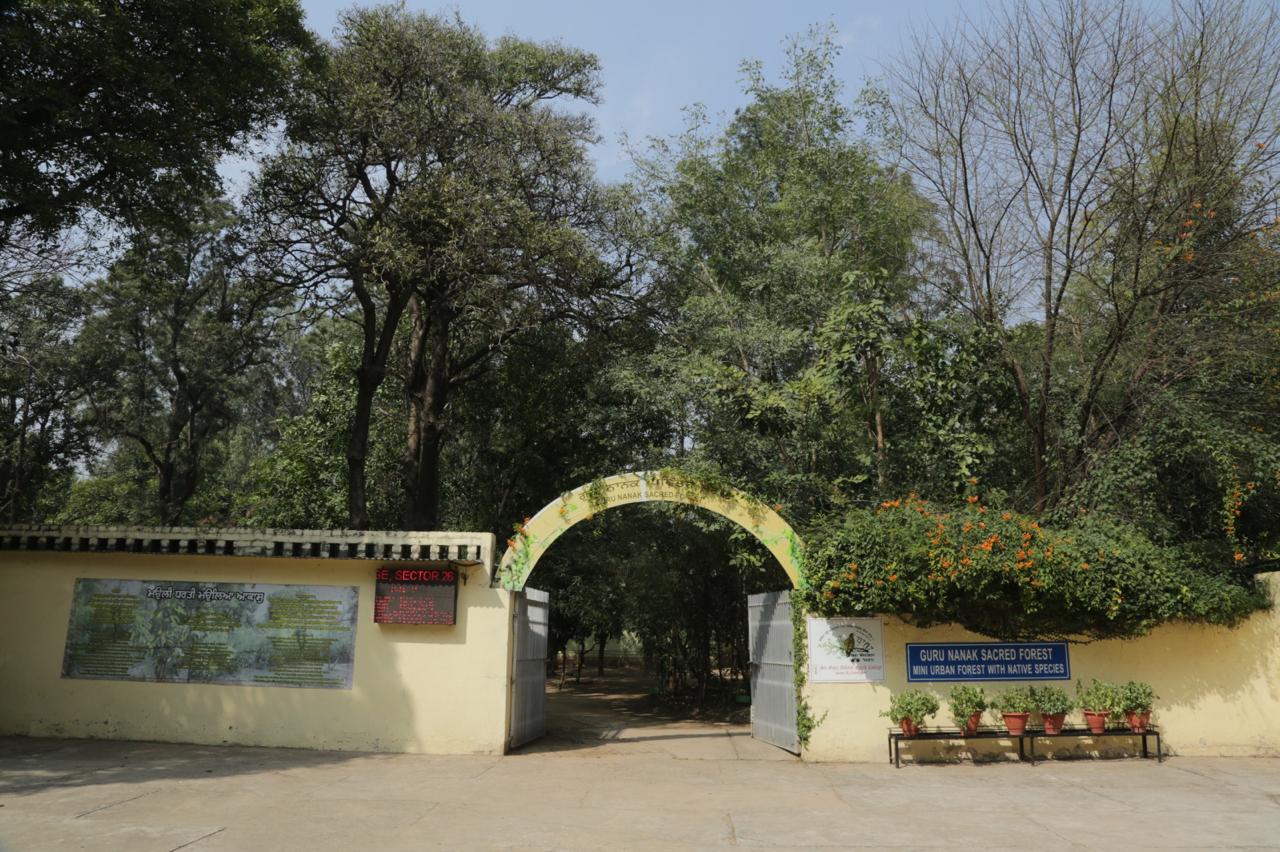
A Mini Urban Forest with Native Species
The flagship green initiative of the College — a dedicated mini urban forest planted with over 600 native trees representing more than 50 indigenous species, including Kachnar, Kadamba, Jamun, Arjun and many more. These species are well-adapted to the local environment and play a crucial role in supporting native birdlife, pollinators and small mammals.
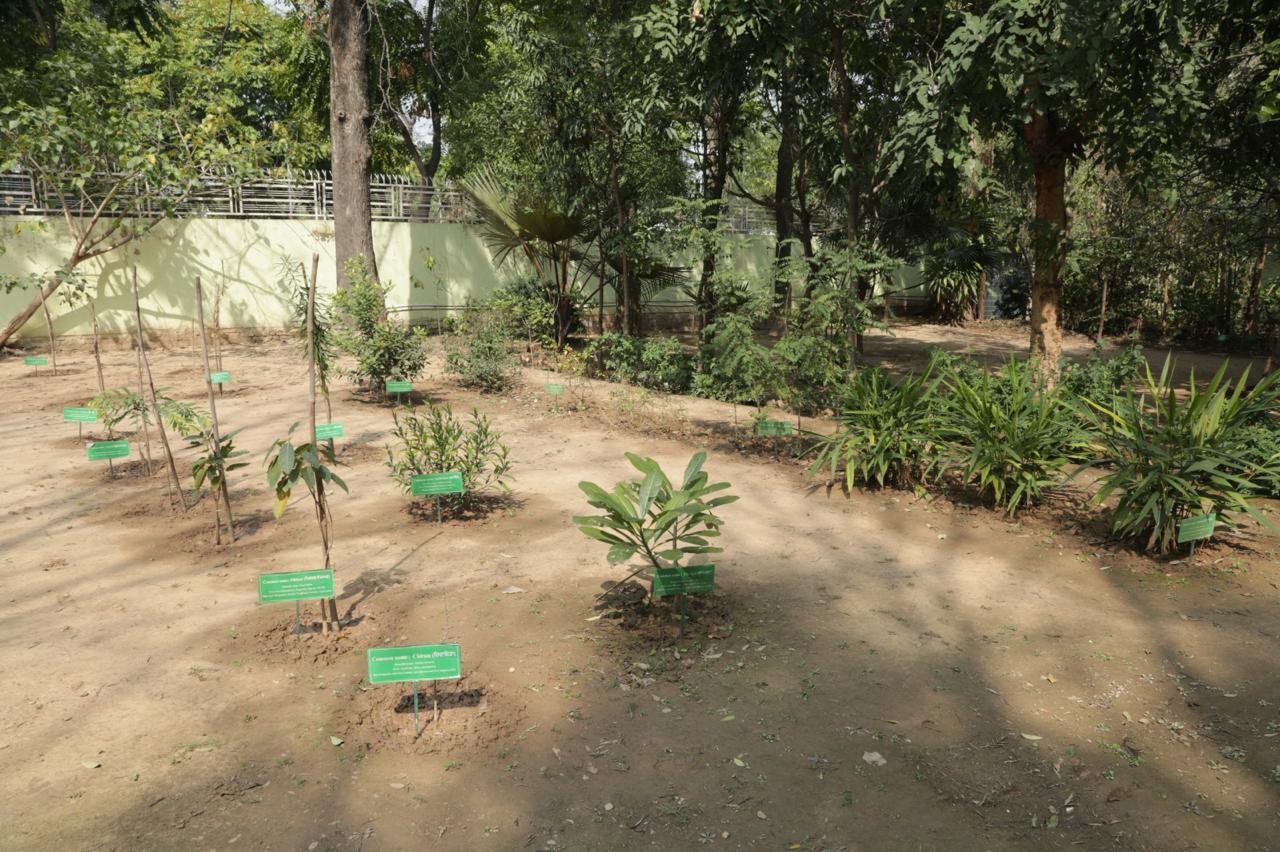
Medicinal & Aromatic Plants of Therapeutic Value
A purpose-designed garden dedicated to plants of healing significance — Neem, Tulsi, Aloe Vera, Ashwagandha, Brahmi and numerous other herbal species — each labelled and curated to serve as a living teaching resource on traditional Indian medicinal botany and ethnopharmacology.
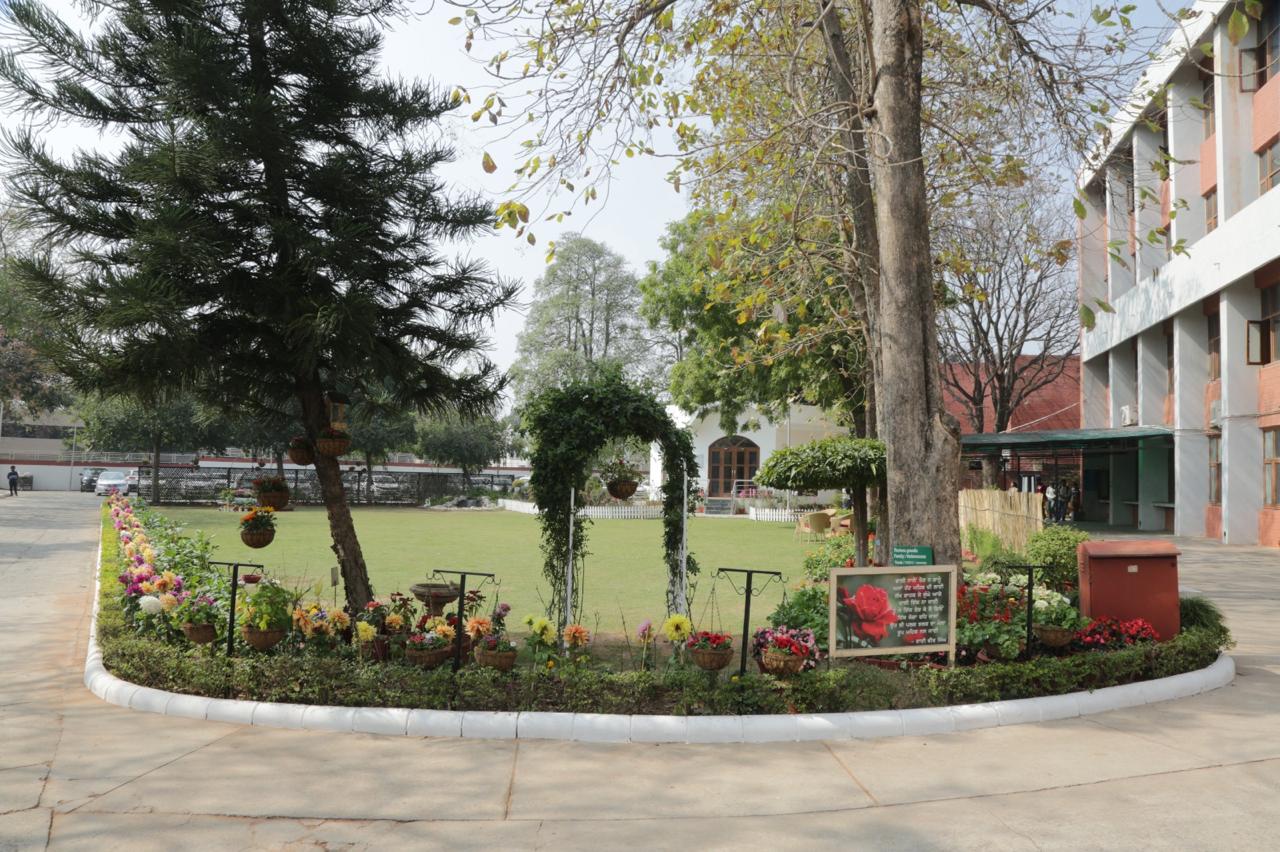

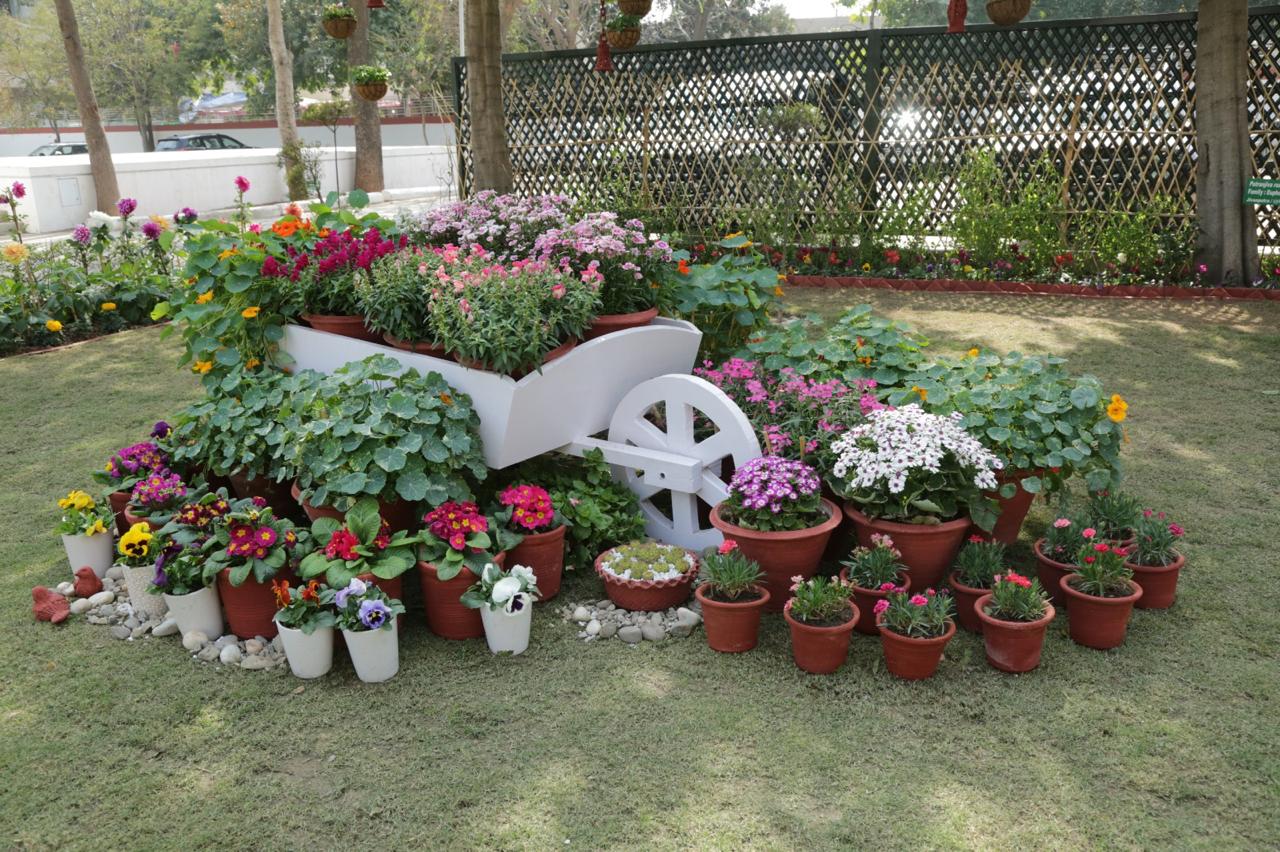
A Garden for Every Month
Inspired by Guru Nanak Dev Ji’s Barah Maha — the twelve-month seasonal cycle — this garden is planted with annual species like Marigold, Petunia, Zinnia, Sunflower and Pansy alongside ornamental beds and a charming water-feature pond. It offers seasonal colour through the year, attracting birds, butterflies and honey-bees, enriching faunal diversity and making it a pollinator-friendly space.
A Curated Reference Collection for Teaching & Research
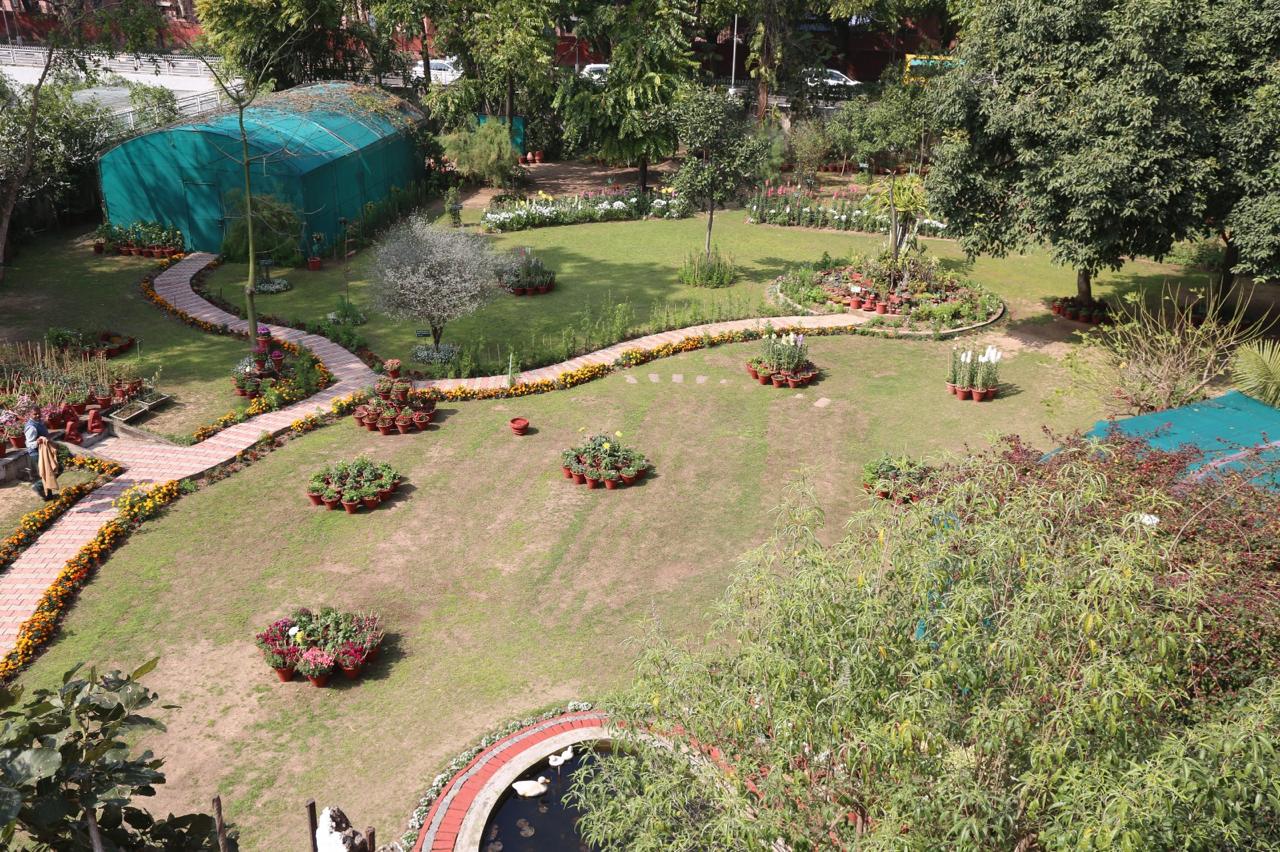
The Botanical Garden serves as a curated reference collection for botanical teaching and research, with structured plant beds, well-defined pathways and a central aquatic pond featuring water-lilies and lotus. It offers students hands-on exposure to plant taxonomy, ecology and morphology — a living laboratory at the heart of the campus.
A Quiet Refuge of Flowering Beauty
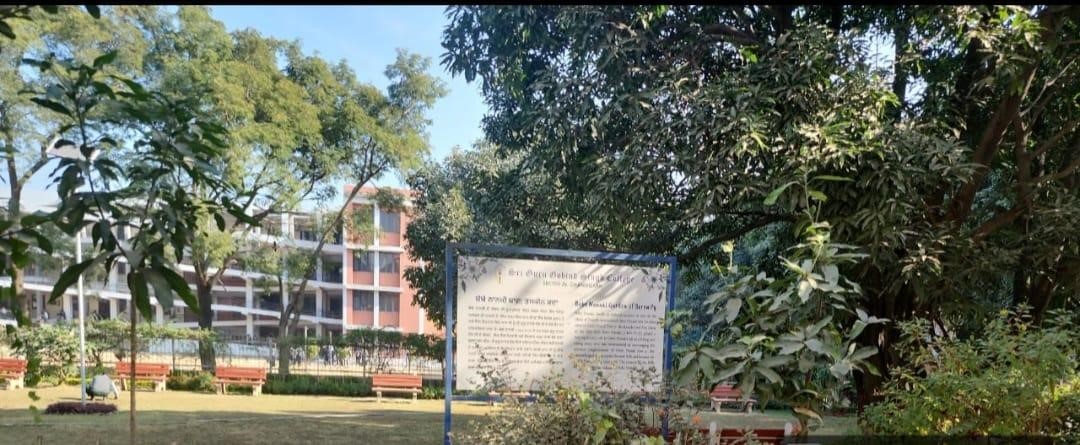
Named in honour of Bebe Nanaki Ji, this serene garden is planted with Dahlia, Chrysanthemum, Zinnia, Poppy, Dianthus, Petunia, Phlox, Marigold and many other flowering species. It contributes to the environmental sustainability and aesthetics of the campus — its blooms have brought many laurels to the College in regional flower shows.
Aromatic, Culinary & Medicinal Herbs
A dedicated herbal collection complementing the Balihari Kudrat Garden, featuring a curated assemblage of culinary, aromatic and lesser-known medicinal herbs of the Indian subcontinent — preserving traditional botanical knowledge while supporting student research projects in phytochemistry and ethnobotany.
The campus features a rich range of plant types, each contributing distinctively to the College ecosystem:
Around 600 native trees spanning more than 50 species — including Kachnar, Kadamba, Jamun, Arjun and many more — are planted in the mini urban forest. Well-adapted to the local environment, they support local wildlife and ecological balance.
Trees like Amaltas, Peepal, Gulmohar, Arjun and Bael shed their leaves annually — adding to soil fertility, reducing temperature fluctuations and providing seasonal canopy structure.
Mango, Ashoka, Jamun and other evergreen species line the pedestrian pathways of the campus, providing year-round greenery, shade and air-purification.
Annual species — Marigold, Petunia, Zinnia, Sunflower and Pansy — planted in the Barah Maha Garden of Biodiversity provide seasonal colour and attract birds, butterflies and honey-bees, enriching faunal diversity.
Long-lasting species — Hibiscus, Lavender, Chrysanthemum, Daylily and many more perennial species — that live for more than two years, offering enduring greenery and floral interest.
Woody shrubs such as Hibiscus, Jasmine and Rhododendron add structural diversity and provide nesting habitat for birds and refuge for small fauna across campus.
Money Plant, Bougainvillea and other climbing species ascend structures and trees, adding vertical beauty and creating habitat niches for various faunal species on campus.
Neem, Tulsi, Aloe Vera, Ashwagandha, Brahmi and various other herbal species — planted in the Balihari Kudrat Garden — are cultivated for their established healing properties, contributing to traditional ethnomedicinal teaching.
A wide variety of indigenous and exotic fruit trees: Mango, Jackfruit, Amla, Pear, Plum, Peach, Jamun, Lemon, Mausami, Grapevine and even Dragon Fruit — supporting biodiversity and providing food for resident frugivorous fauna.
Dahlia, Chrysanthemum, Zinnia, Poppy, Dianthus, Petunia, Phlox, Marigold and many others adorn the Bebe Nanaki Garden of Serenity — bringing acclaim to the College in numerous regional flower shows.
Species grown for decorative purposes — Hibiscus, Rose, Dahlia and other ornamentals — enhance the visual appeal of the College gardens and outdoor learning spaces.
Boxwood, Indian Hawthorn and Duranta are planted in the gardens to define boundaries, create privacy screens and add structured greenery to the landscape design.
Water Lilies, Lotus, Hornwort and Water Hyacinth populate the aquatic pond of the Botanical Garden — creating a serene underwater landscape that complements the vibrant tapestry of campus life.
Together, these diverse plant species create a rich, sustainable and health-promoting environment at Sri Guru Gobind Singh College, Chandigarh — embodying our commitment to ecological stewardship as a daily, lived practice.
Below is a curated entry-point to the eFlora repository. Click on any species to view its detailed botanical profile — covering taxonomy, etymology, distribution, gardening notes, traditional importance and complete morphological description.
Neem · Nimba · Nim · Vepa · Bevu
View profileTeak · Sagwan · Sagun · Tekku
View profileHoop Pine · Moreton Bay Pine · Colonial Pine
View profileGulmohar · Royal Poinciana · Flame Tree
View profileMango · Aam · Mangga · Manguier
View profileIndian Mahogany · Toon · Tun · Red Cedar
View profileThe catalogue is being progressively expanded to include all flora present on the College campus. Additional species profiles will be added as botanical data is documented and verified by the eFlora team.