Prof. Kulwinder Singh
Head · SeniorElectronics
32
Publications
—
Books
15
Conferences
05
FDP / STTP
Five decades of inquiry into matter, energy, and the architecture of the natural world — taught with rigour, practised with curiosity.
The Department of Physics was established in 1969 to provide rigorous, contemporary education to students pursuing a career in the sciences. From an initial intake of around forty students, the department now welcomes more than two-hundred-and-fifty into B.Sc. (I) each session.
Four well-equipped laboratories support a curriculum that is at once classical in its discipline and current in its concerns. The college library carries a substantial physics collection — recently augmented by 227 titles selected for the postgraduate course — and a departmental Book Bank issues full-session textbook sets to financially weak and needy students at no cost.
The active research programme of the faculty centres on Nuclear and Radiation Physics (theoretical and experimental), and Material Science and Nanotechnology. Several faculty members supervise doctoral candidates, and our students consistently clear competitive examinations for teaching, research and professional careers.
Professor M.S. Marwaha, an alumnus of the department and a noted experimentalist, served two terms (2010–2015) on the Executive Council of the Indian Association of Physics Teachers.
Interdisciplinary · B.Sc. Biotech (Elective) · B.Sc. Biotech (Honours)
Theoretical and experimental investigations into nuclear interactions, decay processes, and radiation phenomena.
Theoretical and experimental study of advanced materials and the behaviour of matter at the nanoscale.
Solid-state physics, electronic properties of materials, and theoretical condensed-matter modelling.
Spectroscopic techniques and the study of molecular structure, dynamics, and interactions.
Electronic properties of semiconductor materials and their applications in modern devices.
Analogue and digital electronics, instrumentation design, and applied circuit theory.
Faculty members actively supervise Ph.D. candidates across the department's research domains.
A combined output of more than 100 publications and several authored books and chapters across the faculty.
Successfully running graduate courses in Physics for five decades, the department has now extended its tradition of rigour to its M.Sc. programme — and the merit is showing.
A faculty of ten — across electronics, condensed matter, experimental nuclear physics, semiconductor and material science, molecular spectroscopy — supported by four technical staff who maintain the department's laboratories.
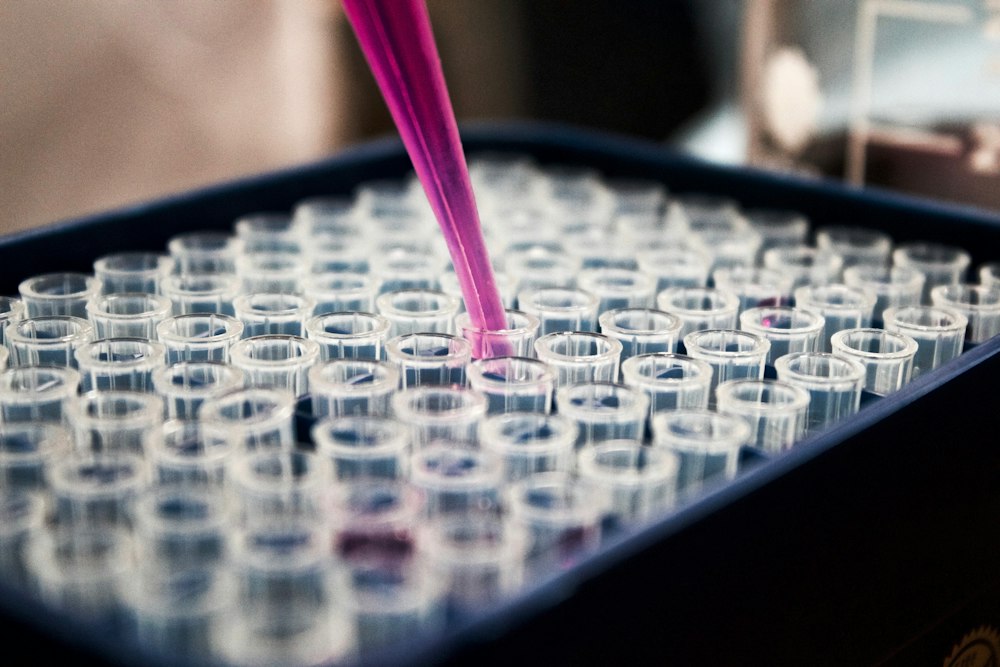
A continuous calendar of guest lectures, special-day celebrations and educational visits — selected highlights from recent years.
From the foundations of mechanics to the frontier of quantum theory, the department welcomes students who are willing to think carefully — and to work patiently — in pursuit of understanding.