
(0172) 2792754, (0172) 2790312 principal.sggs26@gmail.com

eFlora

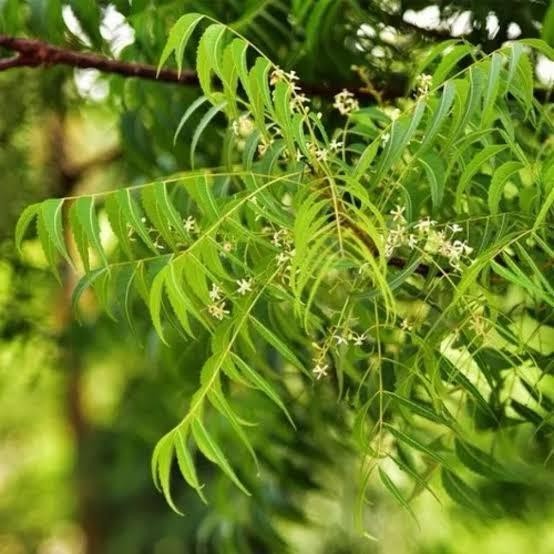
Azadirachta indica A. Juss.

Azadirachta indica (Neem) — eFlora illustration card

eFlora illustration · Sri Guru Gobind Singh College

Meliaceae

Azadirachta indica A. Juss.

Neem, Nimba, Nim, Limba, Vepa, Bevu, Margosa, Indian Lilac

FamilyMeliaceae
NatureTree (Evergreen)
FloweringMay to June
FruitingJune to September

Etymology

Generic Name

Derived from the Persian Azad-dirakht, meaning “free tree”.

Specific Epithet

Latinised form of India, referring to its country of origin.

Plant Distribution

Native to
India, Bangladesh, Cambodia, Laos, Myanmar, Thailand and Vietnam.
Introduced to
Cuba, Iran, Java, Kenya, Nigeria, Oman, Uganda and other tropical regions.

Gardening Notes

  • Moisture: known for its remarkable drought tolerance.
  • Propagation: by cuttings, layering or from fresh seeds sown immediately after collection.
  • Soil: thrives best on well-drained deep, sandy soils.
  • Climate: typical tropical to subtropical tree; tolerates high temperatures (21–32 °C).

Importance

Bark and Leaves
Used in treating skin ailments including ulcers and eczema; possess antiseptic properties that promote wound healing.
Leaves
Have insecticidal properties; used to treat eye disorders and intestinal worms; help manage diabetes by lowering blood sugar levels.
Neem Oil
Used in medicated soaps; possesses antibacterial, antifungal and anti-inflammatory properties; effective in treating acne and maintaining skin health.
Young Twigs
Used for cleaning teeth (datun); have antimicrobial properties, promoting oral hygiene and preventing gum diseases.
Fruits
Purgative; used to relieve constipation; utilised in traditional remedies to treat urinary disorders and haemorrhoids.

Plant Description

Height Up to 30 metres
Root Tap root, branched
Stem Aerial, erect, solid, woody, branched, cylindrical
Leaf Compound, unipinnate, paripinnate, green, alternate; 6–7 pairs of leaflets, leaflet 6–7 cm long, 2–3 cm wide, petiolate, very small petiole (0.1–0.2 cm); adaxial surface dark green, abaxial surface light green; prominent midrib, serrate margins, acuminate tip; unequally shaped and divided leaflets on both sides of midrib
Inflorescence Cymose
Flower Small, actinomorphic, hermaphrodite, complete, pedicellate, with small light-green pedicel
Sepals 5, gamosepalous, light green, small, connate at the base, valvate aestivation, inferior
Petals 5, polypetalous, creamish, valvate aestivation, petals folded outwards, inferior
Stamens 10, filaments united to form a brown staminal tube; yellow dorsifixed anthers, bilobed; longitudinal dehiscence; inferior
Carpels 3, ovary superior, green; style 1 cm long, light green; stigma simple, creamish-brown
Fruit Smooth, green drupe, varying in shape from elongated oval to nearly roundish, ~2 cm
Seed Single, creamish-brown, round, ~2 cm